info@louguthry.com.au I cars 0418536129 I shop 0437938046

Type 01 Jaguar's Biggest Gamble
09/10/2026
Jaguar has finally shown us what the future looks like.
The Type 01 is here, and there is no disguising what Jaguar is trying to do. It is not an updated XJ, it is not a replacement for the F-Type and it is certainly not an attempt to win back the traditional Jaguar customer. It is something entirely different.
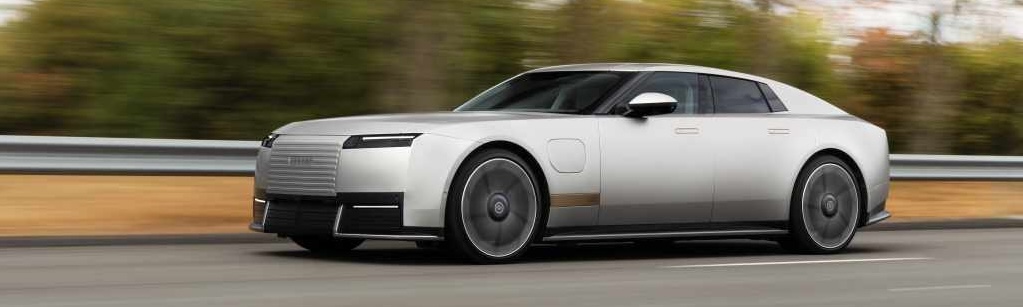
Above: Jaguar Type 01
Whether people like it or not, Jaguar has decided that the old model was no longer sustainable.
That is an uncomfortable thing for many Jaguar enthusiasts to accept, and understandably so. Jaguar has spent decades building some of the most beautiful and desirable cars ever made. For many people, Jaguar is about more than a badge. It is about the shape of an E-Type, the sound of an XK engine, the elegance of an XJ and the feeling of driving an F-Type.
So when Jaguar effectively starts again with an all electric, four door GT costing around £130,000 in the UK and expected to be around $300,000 in Australia, it is perfectly reasonable to ask whether this is really Jaguar at all.
But perhaps there is another question worth asking.
What was the alternative?
For the past 25 years Jaguar has tried, with varying degrees of success, to compete with the Germans. The X-Type and S-Type were aimed at BMW, Mercedes and Audi. Later came the XF, XE, F-Type and XJ. There were some genuinely excellent cars among them, but the commercial results were rarely strong enough.
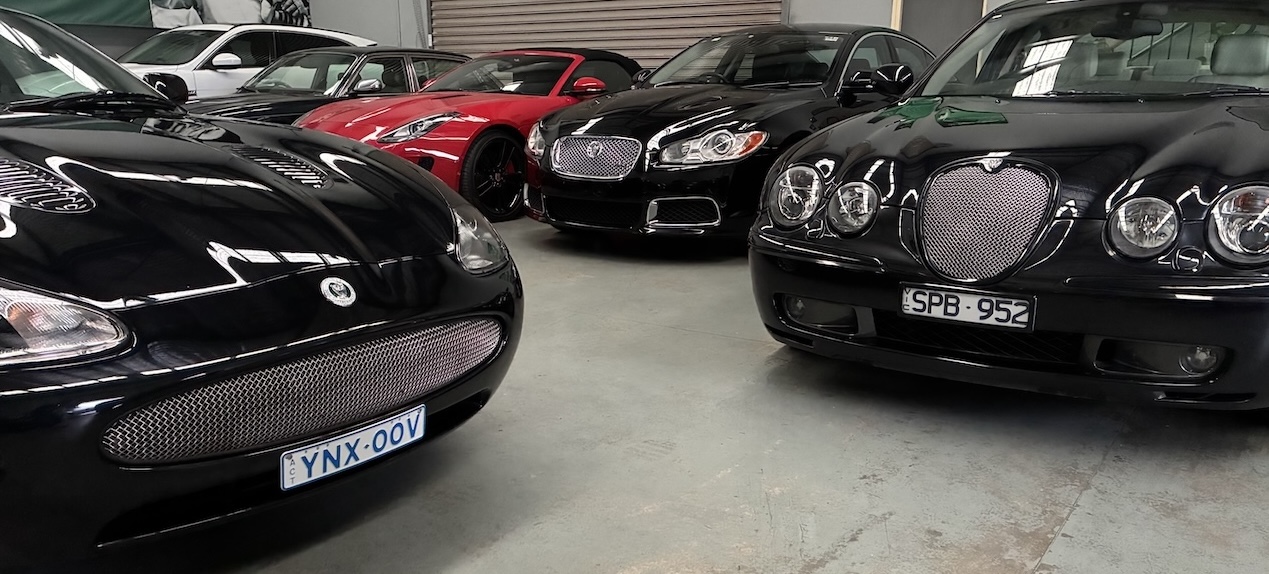
Above: Jaguar XKR 4.2-S, S-Type R, XFR and F-Type S
Jaguar was also late to some of the biggest changes in the market. The Porsche Cayenne arrived in 2002, while Jaguar did not launch an SUV until 2016. Land Rover had hybrid technology in its range years before Jaguar. The problem was not necessarily that Jaguar built bad cars. Quite often it built very good ones. The problem was that it struggled to build enough of them, sell them in sufficient numbers and make enough money from doing so.
And this is where the current situation in the car industry becomes particularly interesting. Manufacturers around the world are dealing with enormous development costs, changing technology, Chinese competition and an uncertain economic environment. Some of the biggest names in the industry are under serious pressure, while the traditional car business is being reshaped by electrification.
Against that background, Jaguar’s decision makes a little more sense.
JLR is not a company that needs to disappear. Range Rover, Defender and Discovery give the group enormously strong brands. Jaguar was the problem. It had a shrinking and ageing customer base, relatively low volumes and an identity that was increasingly difficult to define in a market where almost every manufacturer can build a fast, luxurious and technically sophisticated car.
Jaguar therefore had two choices. It could continue trying to be a smaller version of the Germans, or it could become something completely different.
It chose the second option.

Above: SS Jaguar and Type 00 in London
The Type 01 is the first test of that decision, and it is an extraordinary car on paper. More than 1,000PS, 1,365Nm of torque, a 118kWh battery, 850 volt architecture and a claimed 400 mile EPA range put it firmly into the top end of the electric car market. More importantly, Jaguar is describing it as the first of a new generation of Jaguars, rather than a single standalone experiment.
The price will mean the Type 01 is not for everyone, but it is worth putting the figure into perspective. When Jaguar stunned the world with the E-Type, it offered a sports car with the presence, performance and desirability of an Aston Martin or Ferrari at a fraction of the price. The Type 01 is attempting something similar in the luxury segment, bringing Jaguar into a higher tier with a car that will cost around $300,000 in Australia. Its closest comparison in terms of ambition and exclusivity may be the Rolls Royce Spectre, which starts at around $800,000. The Jaguar sits in a very different price bracket, but both cars are aimed at buyers looking for something distinctive and exclusive. The Type 01 is also not entirely removed from where the last XJ finished, with the final high performance XJ models reaching more than $300,000. Jaguar is taking the place of the XJ at the top of its range and attempting to move the brand further into the luxury market, just as the E-Type once challenged expectations of what a Jaguar could offer.
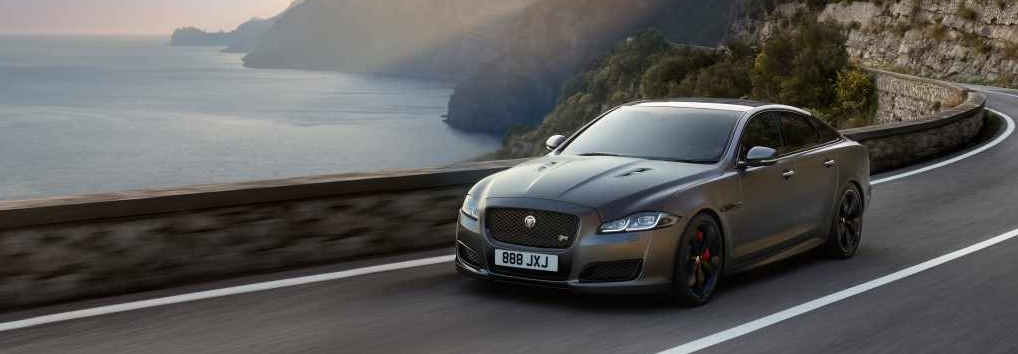
Above: Jaguar XJR575
That does not mean the traditional Jaguar customer has to like it. The people who have owned, collected and maintained Jaguars for decades have every reason to feel disconnected from the new direction. They have a genuine connection to the cars and to what Jaguar has traditionally represented.
At the same time, the old model was becoming increasingly difficult to sustain. Jaguar could continue producing cars for the people who already loved the brand, but if that customer base was getting smaller and the cars were not selling in sufficient numbers, it is difficult to see how that could have continued indefinitely.
The world has changed.
There was a time when people bought a Porsche because of its flat six, a BMW because of its driving feel, a Mercedes because of its engineering and a Jaguar because of grace, space and pace.
Electric cars change some of that equation. A Porsche Taycan is still a Porsche, and its engineering, dynamics and heritage matter, but when an electric Kia can deliver supercar levels of acceleration, the traditional mechanical differences between brands become less obvious. Design, interior, driving experience and the emotional connection to the brand become increasingly important.
That is exactly the space Jaguar is trying to occupy.
It is a risky strategy, but doing nothing was risky too.
We have seen what happens when a great Australian brand reaches the end of the road. Holden is no more. What remains is the history, and the Kingswoods, Toranas, Commodores and Monaros are now celebrated by restoring them, maintaining them, driving them and keeping their stories alive.
Jaguar still has the opportunity to do something different. It can celebrate what came before while trying to create something that has a future.
Above Watch: Detailed walk around video of our 1960 Jaguar XK 150 S 3.8 Manual Overdrive FHC
That does not diminish the cars that came before it. An XK150 S, a Series 1 XJ12, an S-Type R, an XKR or an F-Type can still be admired for exactly what they are. They represent different eras of Jaguar, different technologies and different interpretations of what a Jaguar should be.
In fact, they may become even more important as Jaguar moves into this new era.
Jaguar’s future will be determined by what comes next, but its history is already written. Those cars are sitting in garages, workshops and collections all over the country, and the people who own them, maintain them and keep them on the road are now the custodians of that history.
The Type 01 is simply the next chapter.
It may succeed and it may fail. Nobody knows. But Jaguar has chosen to make a genuine attempt at creating a future for the brand rather than continuing down a path that was becoming increasingly difficult to sustain.
The Type 01 does not replace the Jaguars that came before it, and it does not make them any less special. Those cars will continue to tell the story of what Jaguar was, while the Type 01 and the new generation of Jaguars that follow it will determine what the brand becomes.
Perhaps there is room for both. The old Jaguar can be celebrated for what it was, while the new Jaguar is given the opportunity to show what it can become.
About the author: Nick Guthry and his father, Lou, have worked with Jaguar cars for more than 40 years, buying, selling, preparing and restoring them. Visit: louguthry.com.au
Comments
No posts found
Member