info@louguthry.com.au I cars 0418536129 I shop 0437938046

Jaguar F-TYPE R Coupé Makes Dynamic Debut in Los Angeles
20/11/2013
The Jaguar F-TYPE R Coupé, the most dynamically capable, performance-focused, production Jaguar ever, has made a dramatic debut in Los Angeles at Raleigh Studios.
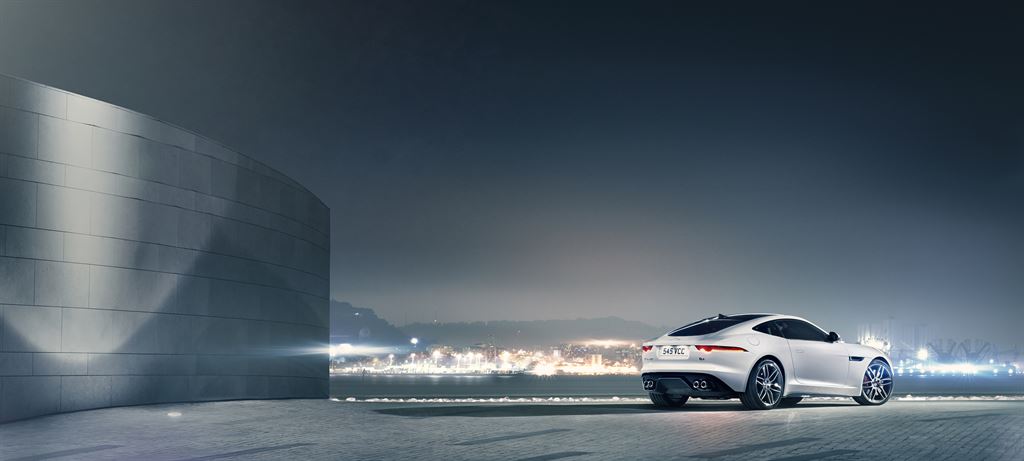
The first glimpse the assembled 500 media, celebrities and customers at the exclusive reveal event saw of F-TYPE R Coupé was of it accelerating towards them before it passed under their grandstand into a hidden tunnel at full throttle.
Ian Callum, Director of Design, Jaguar said: "Creating a sports Coupé is the purest of design tasks, and also the most challenging; get it right and aesthetically the result will be as dynamic as the car should be rewarding to drive. In F-TYPE Coupé, I believe we've got it right.
"The dramatic debut of the 550PS F-TYPE R Coupé in Los Angeles this evening - possibly the most dynamic reveal of a car ever - underlines its performance credentials."
The F-TYPE Coupé model line-up is headlined by the F-TYPE R Coupé, its 550PS/680Nm 5.0-litre V8 supercharged engine enabling acceleration from 0-60mph in 4.0-seconds, and a top speed of 186mph (limited). F-TYPE S Coupé and F-TYPE Coupé models complete the range, powered respectively by 380PS and 340PS versions of Jaguar's 3.0-litre supercharged V6 engine, giving 0-60mph in 4.8/5.1-seconds and top speeds of 171/161mph.
The F-TYPE Coupé range complements the existing 2013 'World Car Design of the Year' award-winning F-TYPE Convertible model line-up of F-TYPE, F-TYPE S and F-TYPE V8 S.
The all-aluminium F-TYPE Coupé - the most dynamically capable, performance-focused sports car that Jaguar has ever produced - is available in three versions:
F-TYPE R, F-TYPE S and the F-TYPE.
The range-topping F-TYPE R Coupé is powered by Jaguar's 5.0-litre supercharged V8 engine in 550PS/680Nm tune, delivering acceleration to 60mph in 4.0-seconds, and a top speed of 186mph (electronically limited).
The F-TYPE S Coupé and F-TYPE Coupé are powered by Jaguar's 3.0-litre V6 supercharged petrol engines in 380PS/460Nm and 340PS/450Nm forms respectively, giving 0-60mph in 4.8/5.1-seconds and top speeds of 171/161mph.
The F-TYPE Coupé embodies the uncompromised design vision of the stunning Jaguar C-X16 concept sports coupé that debuted at the 2011 Frankfurt Motor Show, its dramatic cabin-rearward stance being defined by three heartlines. The first two heartlines - shared with F-TYPE Convertible - form the muscular front and rear wings, the third heartline being the sweeping Coupé roof profile which provides an unbroken silhouette while emphasising the visual drama of the tapered cabin sitting between powerful rear haunches.
Jaguar's expertise in aluminium technology has enabled the design vision for the F-TYPE Coupé to be delivered in a lightweight yet extremely strong bodyshell. Torsional rigidity for all F-TYPE Coupé variants is 33,000 Nm/degree - greater than in any previous production Jaguar - this rigidity providing the basis for excellent dynamic attributes.
The F-TYPE Coupé's body side is made from a single piece aluminium pressing, probably the most extreme cold-formed aluminium body side in the automotive industry, eliminating the requirement for multiple panels and cosmetic joints. The roof panel itself is available in either aluminium or panoramic glass form. A deployable rear spoiler sits within the tapered shut-line of the F-TYPE Coupé, while slim, wrap-around LED lamps flank a beautifully engineered tailgate, with optional powered open/close functionality.
To deliver assured, progressive handling in line with its 550PS output, the range-topping F-TYPE R Coupé features a bespoke suspension set-up and new dynamic technologies. These include a second-generation Electronic Active Differential (EAD) and - for the first time on a Jaguar - Torque Vectoring by braking, these systems working in parallel to provide immediacy of response and exploitable handling. The EAD system automatically redistributes engine torque between the rear wheels to ensure excellent on-the-limit control, while Torque Vectoring by braking intelligently applies precisely metered braking force to the inner wheels as necessary during cornering to enhance agility. Sports suspension with Adaptive Dynamics damping and Configurable Dynamic Mode further enhance the F-TYPE R's immediacy of response, providing an exhilarating and involving driving experience.
F-TYPE R and F-TYPE S Coupé models also have the option of Carbon Ceramic Matrix (CCM) brakes which offer absolute consistency of performance and excellent fade resistance, as well as a total unsprung-weight saving of 21kg.
Every F-TYPE Coupé model utilises Jaguar's eight-speed close-ratio Quickshift transmission which is optimised for sporting performance, with full manual sequential control from the central SportShift selector or steering wheel-mounted paddles.
The F-TYPE Coupé range complements the existing three-car F-TYPE Convertible model line-up; the V6-engined F-TYPE (340PS) and F-TYPE S (380PS), and the 495PS F-TYPE V8 S.
"With F-TYPE Coupé, the Jaguar engineering team has exceeded our considerable target of building a car that delivers even more driver reward than the acclaimed F-TYPE Convertible. Engineering an exceptionally rigid all-aluminium Coupé body structure was the key to achieving this, as it's the fundamental basis for enhanced dynamic attributes. The result is that the F-TYPE Coupé is the most dynamically capable and involving Jaguar we've ever built."
Ian Hoban, Vehicle Line Director, Jaguar
Jaguar C-X17 Sports Crossover Concept Debuts at Dubai Motor Show
06/11/2013
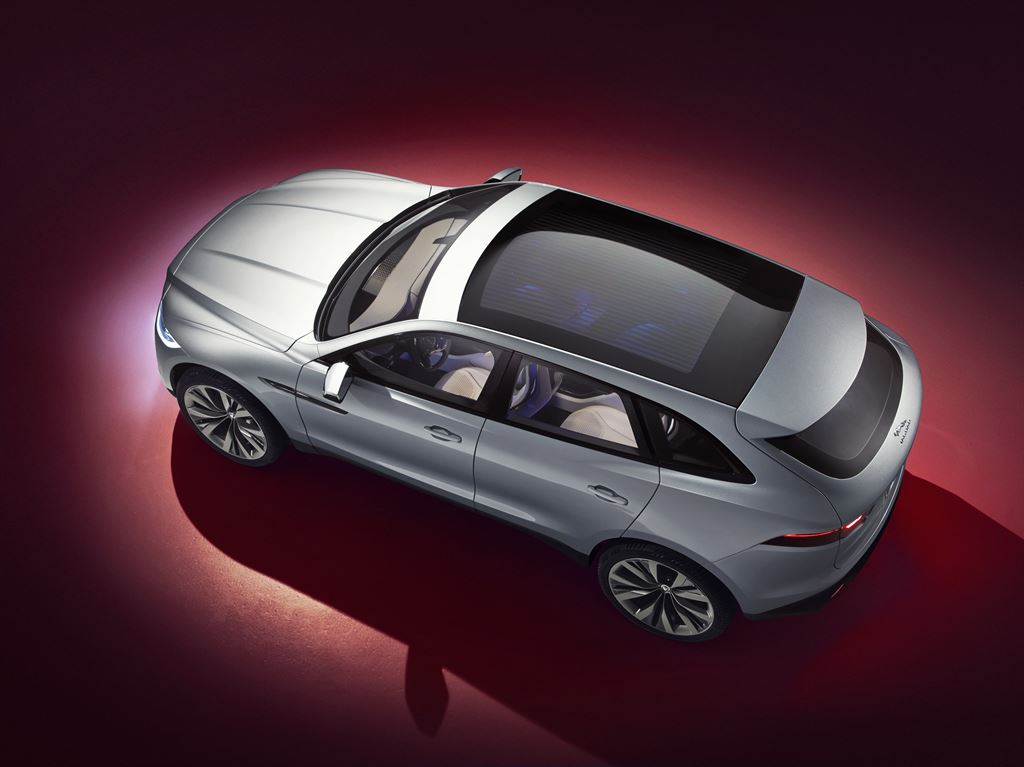
Jaguar's acclaimed C-X17 sports crossover concept vehicle has premiered at the Dubai International Motor Show 2013.
The C-X17 has been created as a design study to introduce Jaguar's all-new advanced aluminium architecture, on which an exciting new range of future Jaguars will be built, beginning with a new mid-sized C/D segment sedan in 2015.
The C-X17 concept is one example of the diversity of vehicles that could be produced using the modular, scalable new architecture. As a sports crossover, it combines the character and driving experience of a sports car with increased presence and flexibility - all imbued with the sleek lines and luxurious sophistication Jaguar is renowned for.
The C-X17 was presnted in Dubai in a lustrous Liquid Aluminium liquid metal finish Purr-fect.
F-TYPE Coupé to Make Dynamic Debut in Los Angeles
06/11/2013
The Jaguar F-TYPE Coupé - the most dynamically capable, performance-focused, production Jaguar ever - will make its global debut on 19 November, the eve of the Los Angeles auto show.
The all-aluminium F-TYPE Coupé range will deliver in production form the uncompromised design vision of the acclaimed C-X16 concept, and will complement the existing 2013 'World Car Design of the Year' award-winning F-TYPE Convertible range.
Ian Callum, Director of Design, Jaguar, said: "The excitement generated when we revealed the C-X16 concept was terrific; so to now be on the cusp of what I can assure you will be a drama-filled reveal event in Los Angeles for F-TYPE Coupé is a very significant moment.
"We've been overwhelmed by the positive reaction to F-TYPE Convertible, but for me the purity of creating a sports Coupé is a uniquely satisfying process - and I know that both visually and dynamically, F-TYPE Coupé raises the bar yet again."
Full technical details, images and film of F-TYPE Coupé will be available on November 20.

Jaguar F-Type Continues To Win Awards
15/10/2013
Jaguar Land Rover achieved a remarkable triple success at the 2013 Scottish Car of the Year Awards, with honours going to the new Range Rover, Range Rover Sport and Jaguar F-TYPE sports car.
The Jaguar F-TYPE beat stiff competition to win the Sporting category award, impressing the judges - some of Scotland's most important motoring journalists - with its elegant design, formidable performance and impressive customer appeal. Alisdair Suttie, President of the Association of Scottish Motoring Writers, said: "We have waited a very long time for the Jaguar F-TYPE, more than four decades in fact, but this year's Sporting winner does it with panache. It also does it with elegance, superb performance and complete desirability."
Ian Callum, Jaguar Director of Design, accepted the award at a ceremony in Glasgow and commented: "This award is a wonderful recognition of the efforts invested in creating the new F-TYPE. It is a sports car that reaffirms the brand's sporting bloodline in both its performance and design."
F-TYPE has also been voted winner of the Autonis design award by the respected German motoring magazine, Auto Motor und Sport, following a poll of its readers.
The F-TYPE, which has been available in Germany since May of this year, was judged in the convertible segment - one of eight categories - taking top-spot with an outstanding 32 per cent of almost 18,000 reader votes.
Jaguar Director of Design, Ian Callum, and Peter Modelhart, CEO of Jaguar Land Rover Germany, accepted the prize at an awards ceremony at Hohenheim Castle yesterday evening.
Speaking from the ceremony, Ian Callum said: "Creating the F-TYPE has given both my team and I great satisfaction. Working on a sports car that holds true to Jaguar's design values - beauty of line and purity of form - has been a great privilege, and I'm honoured the readers of Auto Motor und Sport have recognised our work with this award."
Purr-fect!

‘Wallpaper* Handmade with Jaguar’ and C-X17 Concept Car Make London Debuts at Harrods
06/10/2013
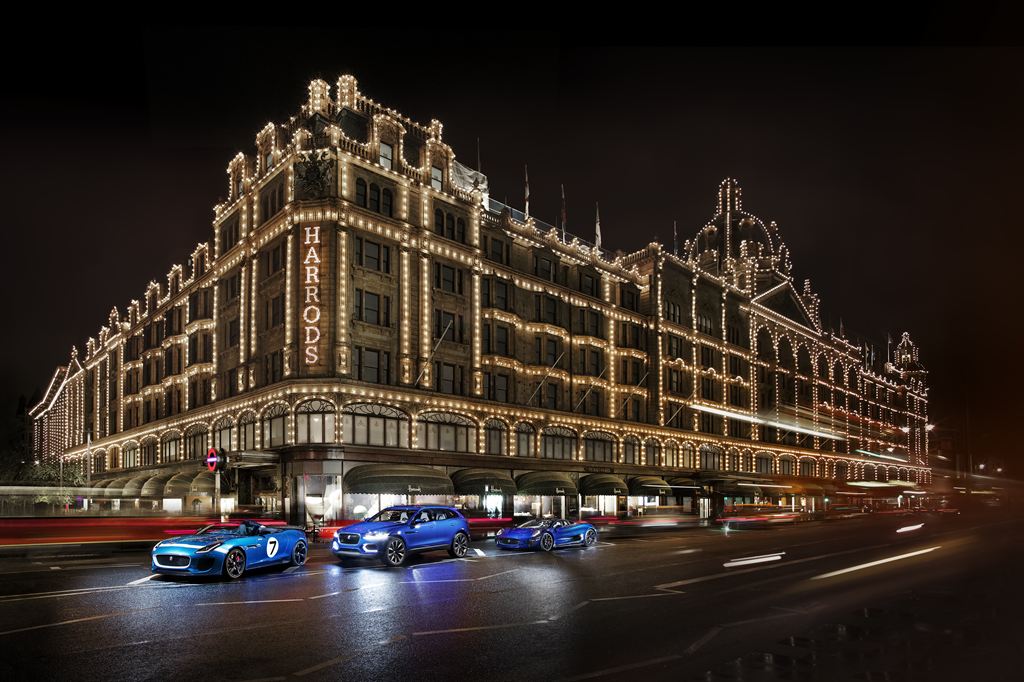
Wallpaper* Handmade, the must-see exhibition during Milan's Salone del Mobile, makes its London debut today at Harrods with a spectacular 'best of presentation' and five unique new pieces produced in collaboration with Jaguar. To celebrate the occasion, Jaguar Advanced Design presented the stunning C-X17 concept vehicle for the first time in the UK, positioned outside the luxury Knightsbridge store and alongside two other exciting Jaguar design concepts; the C-X75 hybrid hypercar and Jaguar heritage-inspired Project 7 sports car.
Over 50 Wallpaper* Handmade pieces, produced by the likes of Hermès, Alfredo Häberli, Harry Winston, Konstantin Grcic, Isay Weinfeld, Paul Cocksedge, Michael Anastassiades, the late David Collins, Barber Osgerby, Brioni, Naoto Fukasawa, Louis Vuitton, Sam Hecht and Poltrona Frau to name but a few, will be on display across 12 windows in the iconic Harrods store.
They will be joined by five new concept products*** which explore Jaguar's design language and advanced technology, by Moritz Waldemeyer, Neri & Hu, Mathieu Gustafsson, Fredrikson Stallard and Salvatori & Jaguar Advanced Design.
Julian Thomson, Jaguar Advanced Design director said:"This partnership with Wallpaper* is very exciting and it is a great opportunity to apply Jaguar design philosophy in new forms and to inspire a culturally diverse audience.
"We have seen our concept cars excite audiences worldwide this year. I am delighted that the UK debut of C-X17 is part of this event and we are able to show another surprising and inspiring side of the modern Jaguar brand to people in London today."
Tony Chambers, Wallpaper* Editor-in-Chief commented: "Our Handmade project is testimony to the power of good design, great ideas, creative collaboration and quality production. We are delighted to bring some of the best pieces from our annual celebration of art, craft, skill and vision to London - with the best British partners one could wish for: Harrods and Jaguar."
Mark Briggs, Harrods store image director said:'As world leaders in style, design and technology, we are delighted to be working with Wallpaper* and Jaguar to bring the Handmade exhibition from Milan to London for the first time. The world-renowned Harrods windows will present this year's shortlisted designers in the perfect luxury space, for all to see.'
Wallpaper* Handmade with Jaguar runs from 4 October until 22 October at Harrods, 87-135 Brompton Rd, Knightsbridge, London SW1X 7XL.
Jaguar Confirms C-X17 Sports Crossover Production for 2016
22/09/2013
Jaguar's first ever sports crossover concept vehicle - the C-X17 - made its debut at the 2013 Frankfurt Motor Show. Since then Jaguar has confirmed production of their new SUV for 2016.
Above: Evo's take on the all new CX-17 concept
The C-X17 has been created as a design study to introduce Jaguar's all-new advanced aluminium monocoque architecture, codenamed iQ[Al],on which an exciting range of future Jaguars will be built. This new philosophy underpins the entire innovative future of the Jaguar brand. A modular and scalable vehicle architecture, engineered and developed for Jaguar, the architecture is high-strength, lightweight, extremely stiff and incorporates innovative efficiency technologies. It enables flexible high-volume production while allowing creative design freedom and competitive interior packaging, without compromising the unique character, dynamics, performance and luxury that Jaguar is famous for. This will enable Jaguar to grow its product portfolio, targeting high-growth areas of the premium market.
As a sports crossover, the Jaguar C-X17 stretches the design possibilities of the segment by combining the character and driving experience of a sports car with increased presence, style and flexibility. The sports crossover concept represents the potential expansion of Jaguar's portfolio of body styles, with the associated enhancement of the brand's relevance and appeal to a wider global audience.
"The C-X17 sports crossover represents an exciting new direction for Jaguar. Its purpose is to highlight our all-new aluminium architecture. With this technical foundation, we will dramatically expand Jaguar's product offering, market potential and customer appeal. This new philosophy will bring technology from our luxury products into an accessible price segment, and when combined with our new ultra-efficient engines, we will set a global standard. Add to these rational values, the class-leading dynamics, and the beauty and purity of form that Jaguar is renowned for, and we have the formula for a monumental leap forward."
Adrian Hallmark, Global Brand Director, Jaguar
Jaguar's first product from the new iQ[Al] architecture will be a new premium C/D segment sedan. Its global rollout will begin in 2015, and it will be the first aluminium monocoque product in the segment.
Power will be provided by engines with a wide range of capacities and output, all delivering inspirational performance and offering the latest innovations in fuel-efficient technologies without sacrificing drivability. These will include the high-output petrol and diesel engines to be built at Jaguar Land Rover's new engine manufacturing facility in the UK, as well as the powerful V6 petrol engine in the F-TYPE, which will provide best-in-class specific power output thanks to the lightweight architecture. These attributes will enable Jaguar to offer a wider variety of vehicles, with exhilarating performance, top speeds of over 300km/h (186mph), as well as emissions below 100g of CO2 per kilometre.
The C-X17 concept illustrates the diversity of vehicles that could be produced using the architecture. A four-seater sports crossover concept built on the aluminium-intensive architecture, it blends sleek lines, sporting design and luxurious sophistication with enhanced flexibility and an assured driving position. In its exciting proportions, purity of form and its beautiful lines - overseen by Director of Design Ian Callum - the C-X17 is every inch a Jaguar.
The C-X17 could offer refined on-road dynamics and sedan car-like handling, thanks to its low height, optimised centre of gravity, and use of cutting-edge dynamic technologies such as Torque Vectoring by Braking, in which the car intelligently uses its brake system to balance the distribution of engine torque to the wheels during cornering, reducing understeer and maximising grip.
"We designed the C-X17 from the ground up from a distinct set of principles, a deep sense of what makes a Jaguar: exciting proportions, clean lines, balance of form. Assertive and powerful, yet with a beautiful sensuality about it, the C-X17 is boldly, distinctively Jaguar."
Ian Callum, Design Director, Jaguar
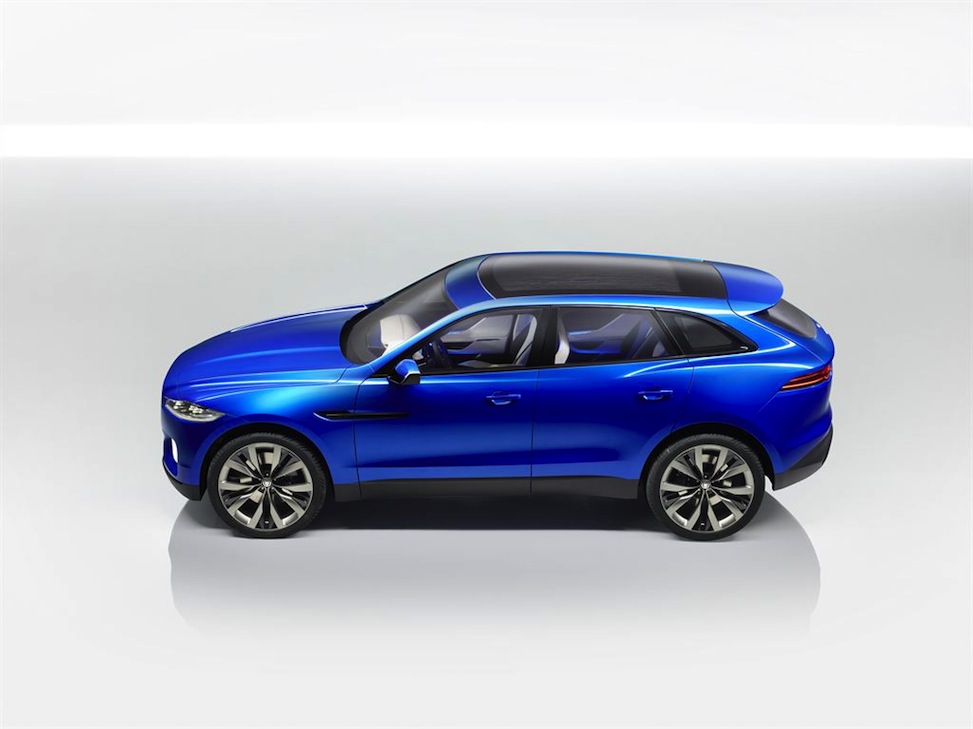
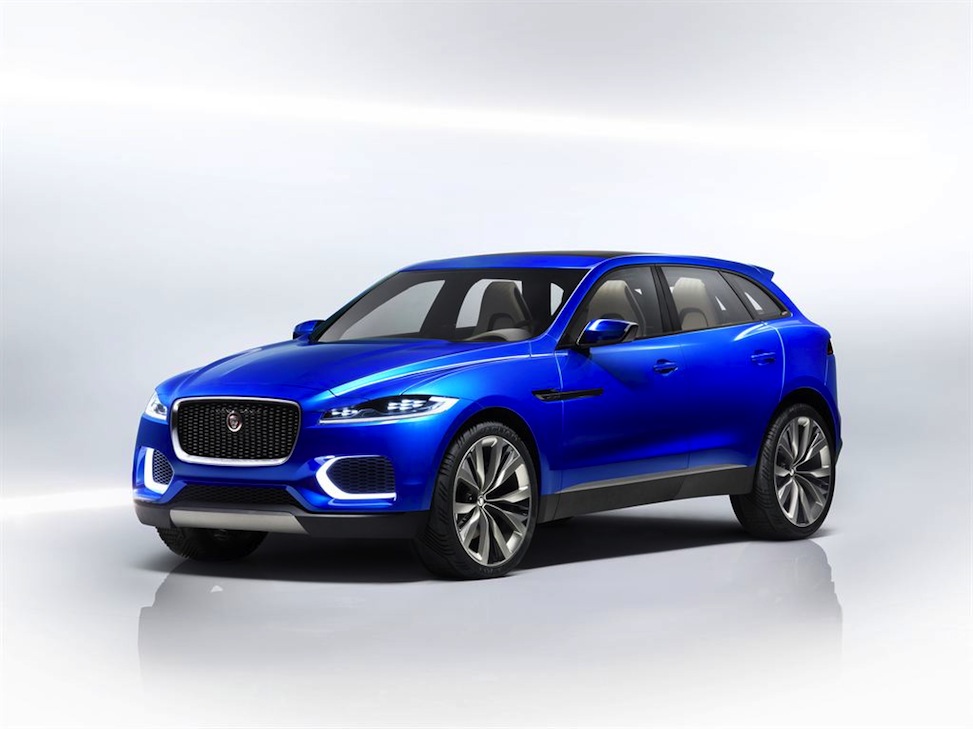
At 4,718mm long and 1,649mm tall, its dimensions are clearly that of a crossover, yet in its design it shares strong family traits with Jaguar's current range. For instance, the grille is an evolution of the distinctive nose of the Jaguar XJ luxury sedan, while the sculptured haunch lines hint strongly of the award-winning design of the Jaguar F-TYPE sports car. A low-sitting stance and overall profile combine with 23-inch alloy wheels to give the C-X17 a sporting, aggressive presence, while the LED headlamps, J-shaped running lights and frosted-glass foglights set into the large front intakes add to the C-X17's purposeful intent. The C-X17 is painted in a lustrous Caesium Blue finish, with gloss black brightwork surrounding the windows, while the split five-spoke alloys are Dark Atlas graphite with gloss black finishers.
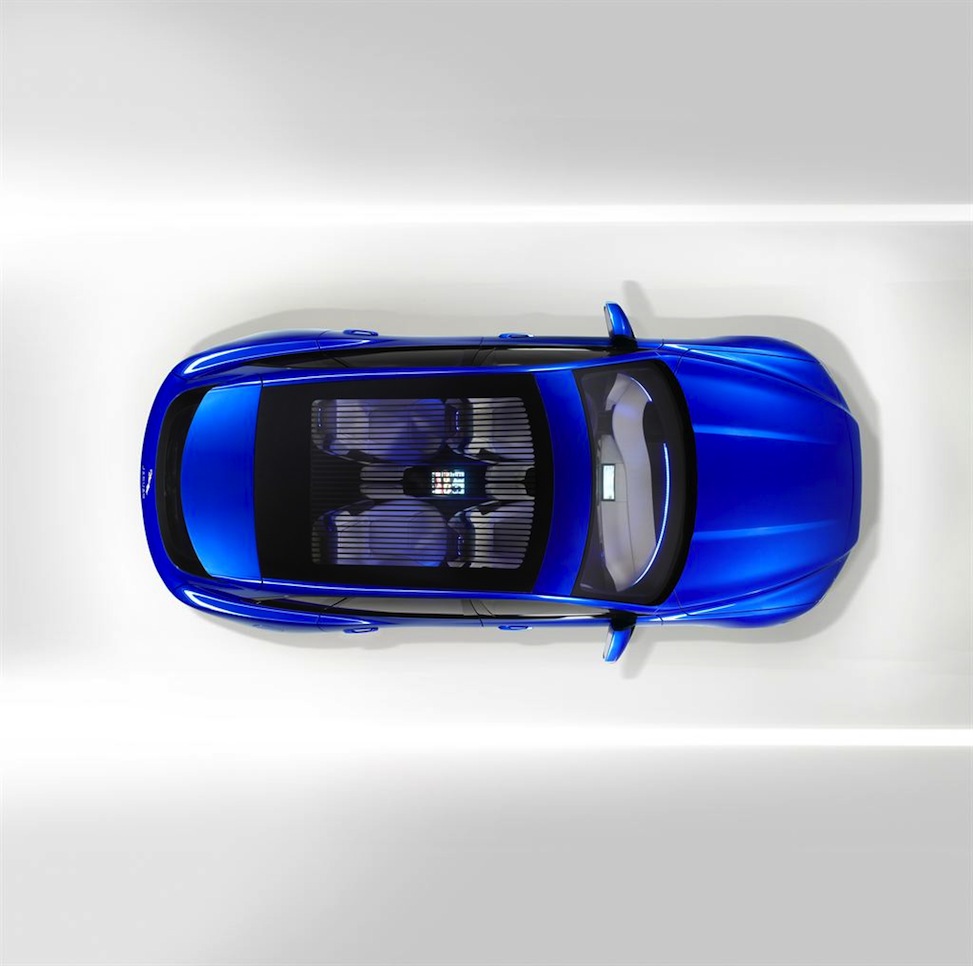
The interior of the C-X17 features four individual bucket seats, which are luxuriously appointed, yet designed for a sculpted, lightweight appearance. The car's unique roof features contoured vanes that provide a distinctive 'elliptical' panoramic view to the C-X17's passengers, while retaining the roof's sleek appearance from the exterior. Two additional rear-mounted leisure seats incorporated in the boot floor swing out for recreational use. Accessories that support an active lifestyle, such as a torch and a camera, are positioned in storage compartments in the boot.
The interior of the C-X17 marries premium, authentic materials and traditional craftsmanship with modern finishing techniques. It features a combination of Jet saddle Connolly leather and Orchid Connolly leather on the instrument panel, seats, armrests, doors, floor and in the boot, with stitching on the saddle leather creating a tactile feel. A subtle layered effect is created through the use of die-cut Houndstooth-pattern leather patches on the main leather panels. Ruthenium, milled aluminium and black brushed anodised metal finishes impart a darker tonal effect to the C-X17's interior. The door finish is gloss black.
A centre tunnel running the length of the car, from the instrument panel through to the rear passenger seats, incorporates the Interactive Surface Console - an interactive multi-passenger infotainment hub with a series of touchscreens under a continuous panel of transparent acrylic glass, which in conjunction with the secure in-car wi-fi network, enables the vehicle's passengers to connect and share experiences with each other and the outside world via social media. The C-X17's premium in-car digital audio system has been specially designed for the vehicle by British specialist audio firm Meridian, and the car's centre console is configured for a Head Up Display projector.
ALL-NEW ALUMINIUM ARCHITECTURE: UNDERPINNING THE FUTURE
iQ[Al] is not just a vehicle architecture, it is a completely new philosophy that underpins the innovative future of the Jaguar brand, enabling Jaguar to significantly grow its product portfolio, targeting high-growth areas of the premium market in global markets.
The first Jaguar to be delivered from the new architecture will be a new C/D segment premium sedan, which will be rolled-out globally from 2015. The first aluminium monocoque product in its segment, the new sedan will be produced at an all-new, ultra high-tech production facility in Solihull, creating new jobs and substantial opportunities for the supplier base.
The aluminium-intensive architecture will be modular and scalable, providing a high degree of flexibility and making it possible to produce a wider bandwidth of models and derivatives than ever before. It is lightweight, extremely stiff and incorporates innovative technologies that emphasises Jaguar's commitment to sustainability, such as a new high-strength alloy made from almost 100% recycled raw material.
The architecture is being carefully developed to fully incorporate all the vehicle attributes established by Jaguar engineers. All products will perform like true Jaguars, the flexibility and scope of the architecture guaranteeing the individual character of each one. Jaguar design and engineering teams collaborated closely on its development from the outset to ensure versatility of design combined with fully competitive interior packaging.
The flexibility that this architecture will provide, means Jaguar designers and engineers can apply the philosophy "anything we can imagine, we can create," to deliver a new portfolio of products less restricted by technical or manufacturing constraints. The new architecture will allow Jaguar to move into higher volume production, without compromising the unique character, breath-taking design, outstanding vehicle dynamics, performance and luxury that Jaguar is famous for. The flexibility of the new architecture will enable the manufacture of different products on the same production line at the same time. The highly efficient, state-of-the-art production process will allow rapid response to variations in market demand for individual models by balancing production volume accordingly.
POWERTRAINS
Future Jaguars will be powered by engines with a wide range of capacities and output, all delivering inspirational performance and offering the latest innovations in fuel-efficient technologies, without sacrificing drivability or feel. The new sedan will be the first vehicle to be equipped with all-new four-cylinder diesel and petrol engines, allowing Jaguar to break the 100g CO2/km barrier for the first time. These advanced, high-output engines will be built at Jaguar Land Rover's new engine production facility, currently under construction in Wolverhampton in the UK as part of a £500 million investment, which will be operational from 2015.
These vehicles are also designed to be powered by the powerful V6 petrol engine seen in the Jaguar F-TYPE sports car, which, combined with the lightweight architecture, will bestow them with best-in-class specific power output as in the F-TYPE. Together, the family of engines will offer the best of both worlds and deliver all-encompassing capabilities: sporting performance and class-leading fuel efficiency and CO2 emissions.
C-X17 DYNAMICS: FLEET-FOOTED AND SURE-FOOTED
As a sports crossover, the C-X17 concept is positioned as a driver's car. It has an on-road bias, and its low height, optimised centre of gravity and lightweight all-aluminium body endow it with superior, car-like driving dynamics and a level of agility that would make it quite at home on the fastest roads. The C-X17 also features cutting-edge dynamic technologies such as Torque Vectoring by Braking, a system which constantly monitors the vehicle's cornering dynamics and, when required, intelligently uses the brake system to rebalance the distribution of engine torque to the wheels, in order to reduce understeer and maximise grip.
With its 213mm ground clearance and intelligent All-Wheel Drive, the C-X17 could also offer reassuring capability and enhanced grip on poor roads and in varying weather conditions. Jaguar's intelligent All-Wheel Drive system continuously monitors grip levels and driver inputs and uses feed-forward torque distribution to both pre-empt and react to wheel-slip, providing greater driver confidence and vehicle stability in low-grip conditions. In normal grip conditions, the system predominantly delivers drive to the rear wheels, providing the dynamic driving experience all Jaguars are renowned for.
EXTERIOR DESIGN: BEAUTY OF PROPORTION
With a crossover being a new journey for Jaguar, Director of Design Ian Callum and his team were clear that the C-X17 would not compromise on the time-honoured values of Jaguar car design: purity of form, beauty of line and balance of proportion. Even as it subscribed to the practicalities expected of the crossover category, the C-X17 had to be stylish, sporty and exciting. It had to instantly stand out from the crowd, yet retain the sense of timeless sophistication that is typically Jaguar.
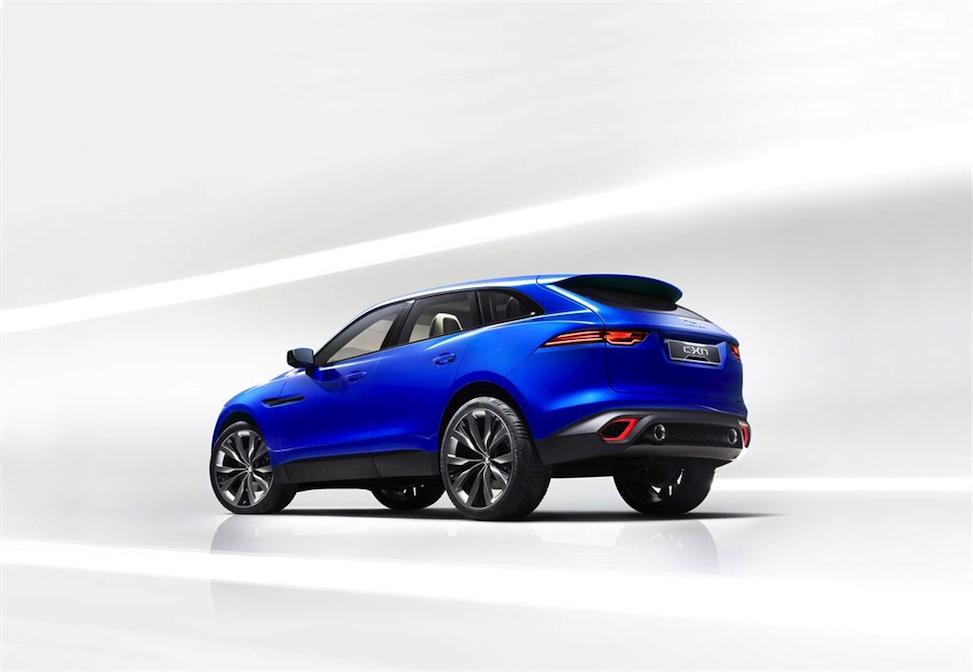
The C-X17 has dynamic yet perfectly balanced proportions, with the low profile and large wheels giving it a powerful, planted stance. In terms of form, it is sleek and fast, relying on pure lines rather than exaggeration or showmanship. The long bonnet's twin 'power bulges' and prominent grille impart a muscular look. The headlamps hint at the C-X17's sedan siblings while the grille is inspired by the XJ, resulting in a distinctive family look that is reassuringly familiar yet uniquely appealing. The grille features a hexagonal pattern, with small aluminium panels within its structure that can close to enhance the vehicle's aerodynamic properties.
The C-X17's twin 'heartlines' are clearly visible when viewed in profile. Two clean and simple design lines, with a subtle crease in the metal to catch the light, visually tie together the C-X17's shoulder and haunch. The accentuated length of the windows adds to the vehicle's overall sense of sleekness.
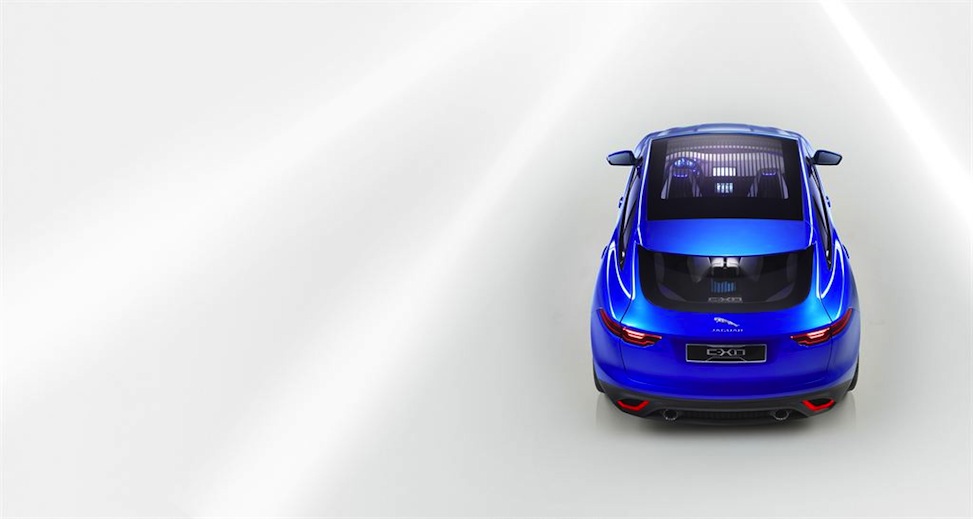
The rear of the vehicle has a distinctive touch of sports car about it, with the haunch, taillights and detailing all bringing to mind the seductive Jaguar
F-TYPE. The C-X17's roofline swoops quickly rearwards, culminating in a distinctive cantilevered spoiler over a steeply raked rear window that enhances the crossover's sporting, 'fast-even-at-standstill' appearance.
The exterior paint finish is a lustrous Caesium Blue, and the window liners are gloss black, with the only brightwork on the vehicle being the badging at each end, lending the car a darker, sportier look. The large 23-inch wheels, which enhance the C-X17's solid stance, are a one-off design with five split spokes. They have a Dark Atlas graphite grey finish with gloss black finishers on the spokes.
INTERIOR DESIGN: CRAFTSMANSHIP AND TECHNOLOGY
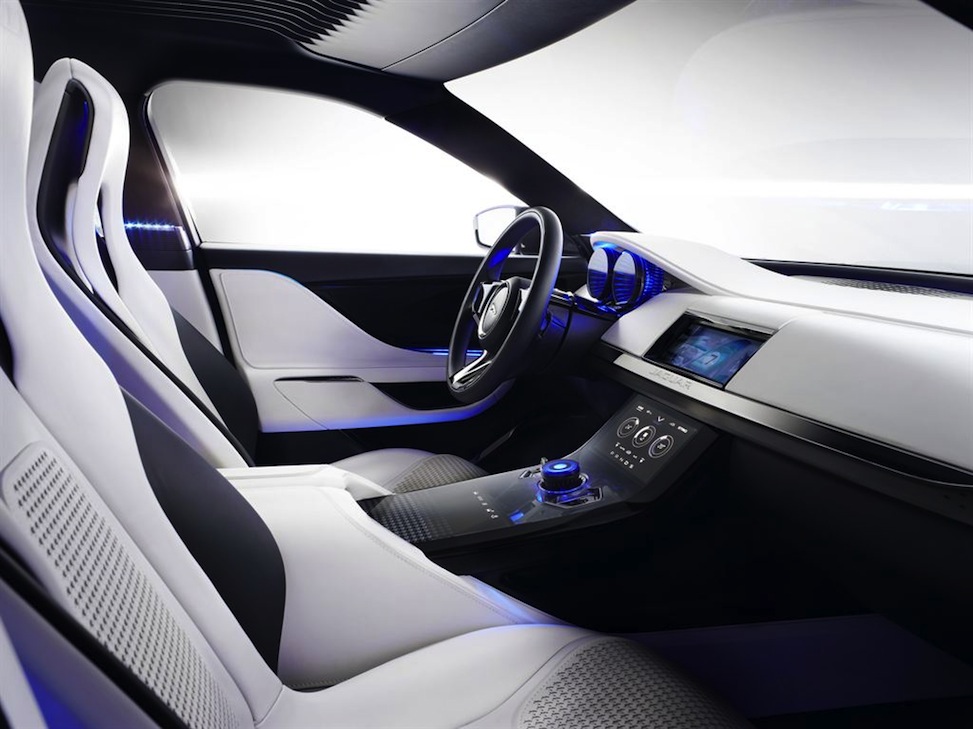
"The C-X17's design is timeless, yet absolutely up-to-the-minute. Artisan treatment meets modern techniques in an innovative cabin full of luxurious touches and cutting-edge technical ideas."
Julian Thomson, Director of Advanced Design, Jaguar
The interior of the C-X17 blends high-end interactive technology with premium, traditionally crafted materials, resulting in a spacious, airy, luxurious and sophisticated cabin.
The C-X17 seats four passengers in individual bucket seats. The seating position is relatively low for a crossover, giving the occupants a feeling of sitting deep within the cabin. The seats are lightweight units with a sculpted free-standing appearance, visually enhancing the airiness of the cabin.
The spacious boot incorporates two leisure seats that swing up and out of the boot floor for use when the car is stopped and the rear hatch opened. Solidly constructed from milled aluminium and finished in Connolly saddle leather, these seats swing outwards on a beautifully engineered hinge to provide a practical seating area when the car is stationary. Accessories that support an active lifestyle, such as a torch and a camera, are positioned in leather holsters, in storage compartments located in the boot.
Panoramic sculpted roof
The sense of openness inside the cabin is heightened by the C-X17's unique panoramic roof. The designers of the C-X17 have constructed the interior of the roof from a series of sculpted vanes running from front to rear, closely arranged in parallel and integrated into the header and cant rails. They are contoured on the lower side to generate extra headroom, and shaped to create a ring of space that enables a whole-roof view of the sky above, giving the occupants a sense of openness. The topside of the vanes follows the smooth profile of the glass roof, maintaining the sleek exterior lines of the C-X17.
Premium two-tone leather trim
The interior of the C-X17 is a juxtaposition of premium traditional materials and modern finishing techniques. Designers drew inspiration from a variety of sources, from extruded aluminium lampshades and lattice-framed stools to premium leather shoes, jackets and handbags, which favoured strong colour contrasts.
Accordingly, the seats, instrument panel, floors, doors and boot are finished in an overlapping combination of Jet saddle leather and Orchid leather panels. Renowned British leather specialist Connolly, the benchmark name in premium automotive cabin craftsmanship, created the bespoke leather panels specially for the C-X17. The 3mm-thick saddle leather, which features bands of stitching to increase the passenger's tactile experience of these surfaces, is die-cut in a Houndstooth pattern inspired by traditional tailoring materials, lending the interior of the car a classy yet contemporary feel.
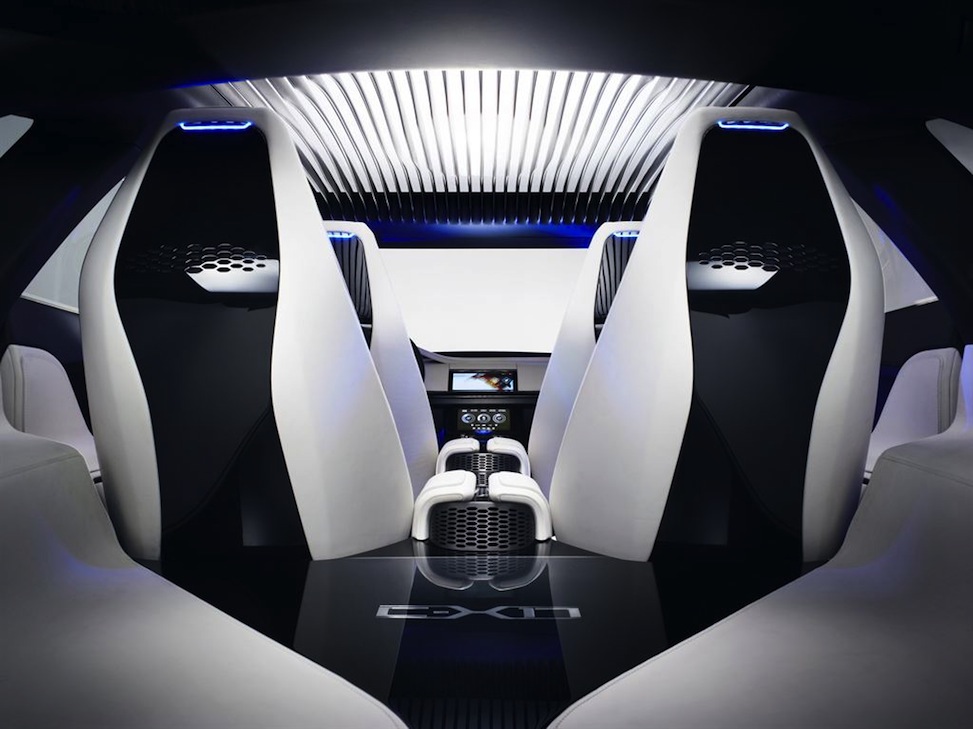
The interior door finish is gloss black, while for the interior metal finishes, ruthenium (a member of the platinum family) is used instead of brightwork, creating a darker, more tonal effect that suits the subtle, premium feel of the cabin.
Multi-passenger interactivity
The C-X17 takes interactivity to a new level with the unique Interactive Surface Console that runs the length of the car's centre tunnel, from the centre console of the dashboard through to the rear seats. Made up of a series of interconnecting touch screens encased in transparent acrylic glass, the Interactive Surface Console connects those in the rear cabin with the driver and front seat passengers via a secure in-car Wi-Fi network.
The Interactive Surface Console allows the vehicle occupants to upload pictures, video and sound files from their mobile devices and share them with their fellow passengers, as well as on Facebook, Twitter, Instagram and other social media channels. Using the touchscreens and an intuitive user interface, information can be 'flicked' forwards and rearwards between the front and the rear passengers. By enabling sharing, both in terms of technology and information,between the occupants of the C-X17, the Interactive Surface Console puts as much focus on the rear compartment as on the front and immerses all four passengers in a unified multisensory experience.
The C-X17 features a 28-loudspeaker system specifically developed for the vehicle by British ultra-premium audio experts Meridian. Designed closely in conjunction with the development of the C-X17's interior, the system draws on Meridian's award-winning digital sound processing technology. Trifield technology creates an all-enveloping sound field that makes each listener feel that the music is exclusively focused on him or her. With sub-woofer drive units in the rear centre tunnel, dashboard-mounted tweeters, speakers in the A and B pillars, twin door speakers, rear speakers, and head-height speakers situated in the tops of the front seat head rests, this unique system enables every occupant of the C-X17 to enjoy optimum, authentic sound for an exceptional in-car audio experience.
The C-X17's instrument panel has a twin-dial configurable TFT console with provision for a Head Up Display - a system which projects vital information onto the windscreen for the driver to process quickly, akin to the systems used in modern fighter aircraft.
The gearshift has a rotary dial, finished in ruthenium, which rises on activation and serves as the interface to toggle between driving modes such as Road, Sport or All-Road. Milled aluminium vents on the console, seats and doors mirror the pattern of the grille mesh.
C-X17 TECHNICAL SPECIFICATIONS
Dimensions (mm)
Length 4718
Wheelbase 2905
Height 1649
Width1959
Ground clearance 213
2014 Model Year Jaguar XJ Updates
31/08/2013
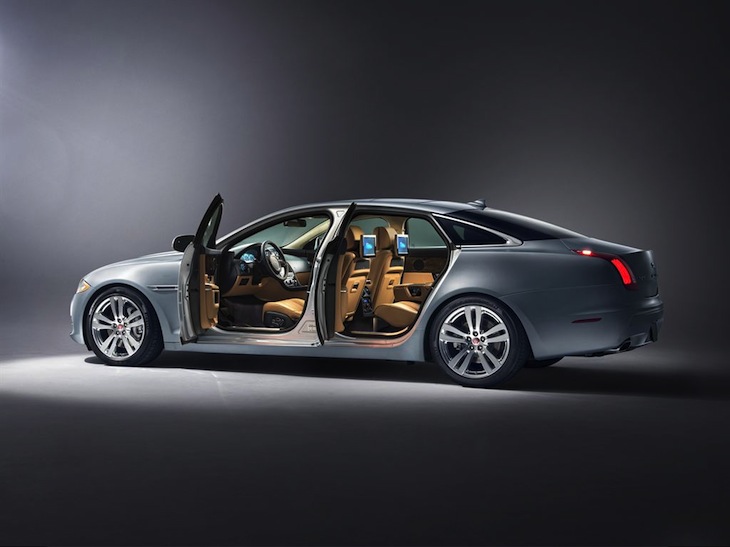
"The 2014 XJ represents the summit of Jaguar's luxury saloon range. The XJ's unparalleled breadth of talent combines class-leading levels of luxury, comfort and performance with the elegant, contemporary design for which Jaguar is renowned."
Adrian Hallmark, Global Brand Director, Jaguar
SUMMARY
The 2014 model year Jaguar XJ is the latest in a long line of luxurious Jaguar sports saloons, incorporating enhanced rear cabin luxury features, comfort and in-car technology to create a truly elegant and contemporary luxury Jaguar.
The Jaguar XJ is offered with a choice of a 2.0-litre 4-cylinder i4 turbocharged petrol engine, diesel and supercharged petrol 3.0-litre V6 engines and four 5.0-litre V8 petrol engines, one normally aspirated and three supercharged.
The 3.0-litre V6 supercharged petrol engine, which has been developed from the award-winning 5.0-litre V8, powers Jaguar's 'intelligent' All-Wheel Drive system which continuously monitors grip levels and driver inputs to provide maximum traction in all conditions.
The 2.0-litre i4 turbocharged petrol engine, now available with Jaguar's Intelligent Stop/Start system, uses a range of state-of-the-art technologies for power generation that belies its size. It produces 240PS and 340Nm thanks to the use of three key innovations - low-inertia turbocharging, direct fuel-injection and variable timing of both the intake and exhaust camshafts.
These engines, as well as the other XJ variants, are mated to Jaguar's eight-speed automatic gearbox which offers a broad spread of ratios for a perfectly balanced combination of smooth-shifting, economy and driver control.
The long-wheelbase models feature enhanced rear cabin luxury features which include 'airline' style reclining seats with massage function, increased headroom*, fold-out business tables and a specially re-tuned rear suspension set-up to enhance rear seat ride comfort.
*Not for the US market
The entertainment system has been enhanced with a Rear Seat Entertainment package featuring two hi-resolution touchscreens, and optional premium Meridian Reference Audio System with Conversation Assist.
The 14MY XJ's luxurious feel is underlined by the palette of materials used on the interior. This includes Bond grain, soft grain and semi-aniline leather, and a wide choice of veneers including Piano Black, Carbon Fibre, Gloss Burr Walnut and Satin Rosewood. The 14MY XJ also features a range of wheels including the newly designed Manra 18-inch lightweight forged alloy.
The 14MY 'R' version of the XJ incorporates bespoke chassis and aerodynamic developments to create the most focused, agile and responsive XJR ever. Seamless performance from its 550PS/680Nm, 5.0-litre supercharged V8 engine makes the XJR capable of accelerating from zero to 60mph in 4.4 seconds (0-100km/h in 4.6 seconds) and on to an electronically limited top speed of 174mph (280km/h).
"With a dynamic set-up tuned for both performance and incredible comfort, the new XJR brings immense breadth of capability to the segment, creating the ultimate high-performance luxury saloon car."
Andrew Dobson, Chief Programme Engineer, Jaguar XJ
ENHANCED INTERIOR FEATURES
The 2014 XJ features a range of enhanced interior features focussed on the rear cabin of the car, which upgrade both the luxury and functionality of the XJ's rear environment, resulting in the most accomplished Jaguar luxury saloon.
The rear passenger compartment of the 2014 LWB car includes two individual 'airline style' reclining seats which both feature cushion and squab adjustment, three massage programs - Wave/Rolling, Lumbar and Shoulder - to provide optimum levels of relaxation during long journeys, lumbar adjustment and two memory settings for each seat. The total recline adjustment of each seat is 11 degrees, with 103mm lateral cushion movement and 14 degrees of upper articulation movement. The rear seat home positioning setting returns each seat to its home position at the touch of a button on the door panel, easing entry and exit.
The new centre armrest, which can be stowed in the upright position to allow the use of the centre seat, houses all the seat controls as well as the Front Seat Activation button which allows control of the front passenger seat from the rear.
Front seat enhancements include massage functions for each seat with five levels of intensity, allowing occupants to personalise their massage settings to their preference.
Through the use of the front touchscreen, any one of the four electric seats can be selected and then fully controlled via the driver's seat switches. The rear seats can be returned to their home position by the use of the touchscreen and driver's memory buttons, and can also be programmed to return to their home position on rear door opening for ease of entry and exit.
Rear-seat passengers in the LWB version of the 2014 XJ are provided with a wide range of entertainment features. The Rear Seat Entertainment package comprises two 10.2" high-resolution screens mounted on the back of the front seat headrests. These can display inputs from a number of sources; the DVD player, digital TV tuner or an external media player that can be synced through the Rear Media Interface, which provides USB and RCA connections. Audio can be transmitted through the wireless headphones, allowing each passenger to watch separate entertainment sources. The rear seat environment, including the entertainment, is managed by a wireless controller housed in the centre console which also allows passengers to alter their individual climate zones and seat heating and cooling functions.
The LWB XJ also features leather-surfaced business tables in the rear, which fold out of the seatbacks of the front seats. To keep rear seat passengers shielded from the sun, and to offer privacy, the XJ offers electric rear-side window blinds that are operated via the window lift switches. An increase in rear headroom* by 13mm gives rear-seat passengers the optimum in luxurious, limousine levels of comfort.
*Not for the US market
POWERTRAIN
The 2014 XJ engine range includes an ultra-efficient, high-powered 2.0-litre i4 turbocharged petrol engine, powerful and efficient 3.0-litre V6 petrol and diesel engines, as well as a 5.0-litre normally aspirated engine and three supercharged 5.0-litre units putting out 470PS, 510PS, and in the XJR, 550PS.
The XJ's 3.0-litre V6 supercharged petrol engine powers the car's All-Wheel Drive system which operates 'intelligently', continuously monitoring grip levels and driver inputs to both pre-empt and react to wheel-slip, enabling maximum traction in all conditions. At speed in normal grip conditions the AWD system delivers drive to the rear wheels, thus providing the dynamic driving experience that all Jaguars are renowned for, while also maximising powertrain efficiency in all weather and road conditions.
The 2.0-litre i4 turbocharged petrol engine, which produces 240PS and 340Nm of torque, is offered with Jaguar's Intelligent Stop/Start system for 14MY.
Eight-speed Transmission
Maximising the benefit of the engine calibration is the eight-speed automatic transmission, which brings out the performance of the XJ while still maintaining the car's composure in town and in low-speed driving environments.
When operating in automatic mode, the transmission can detect the manner in which the car is being driven by monitoring acceleration and braking, cornering forces, throttle and brake pedal activity, road load and kickdown request. On detecting a more enthusiastic driving style, the transmission will automatically make the gearshifts more aggressive and move the shift-up point higher in the rev range. Steering wheel-mounted gearshift paddles give the driver higher levels of control.
Intelligent Stop/Start system
The 14MY XJ powered by the 2.0-litre four-cylinder turbocharged petrol engine now features Jaguar's Intelligent Stop-Start system, which uses a Twin Solenoid Starter (TSS) to shut down the engine when the car comes to a halt, and restart it in less time than it takes for the driver's foot to move from the brake to the accelerator.
The system offers 'change of mind' functionality, enabling the engine to quickly restart even during its rundown phase to allow the driver to, for example, exploit a gap in traffic at a junction. An illuminated 'ECO' symbol appears on the instrument panel when the engine has been stopped by the system. Intelligent Stop-Start can be turned off manually, but it will automatically be turned on again for the vehicle's next journey with every ignition cycle. The system operates in all modes apart from Reverse. The 14MY XJ has a secondary battery fitted specifically for engine re-starting, meaning that all the normal car systems - such as the entertainment system, the ventilation and lights - continue to receive power from the standard car battery and are unaffected by the re-start. In addition, a sophisticated control system ensures that the Stop/Start operation only occurs when the car does not require the engine for other functions.
EXTENDED NAVIGATION FEATURES
With the 14MY XJ, navigation is now available in nearly all the 101 markets that the XJ is sold in. A number of markets will now have an SD card based system, which uses the capacitive touch screen and integrates with the vehicle positioning systems to providing accurate and fast route guidance. As an industry first, a combination of Tracks4Africa and City Maps covering 15 African markets is offered.
REAR SUSPENSION ENHANCEMENTS
To underline its purpose in ensuring that passengers remain luxuriously cosseted at all times, the LWB version of the 14MY XJ features revisions to the rear suspension for optimised ride compliance, providing a smoother journey for rear seat occupants.
While this provides a truly relaxing experience for rear seat passengers, the XJ loses none of the model's core dynamic abilities and so is as rewarding to drive as it is to be driven in. The XJ's lightweight aluminium construction means a weight saving over its rivals of as much as 150kg, resulting in great advantages in terms of agility, acceleration, braking and driver feedback and involvement.
EXTERIOR FEATURES
14MY XJ customers can choose from an exterior palette comprising 15 colours: Polaris White, Ebony, Ultimate Black, Stratus Grey, Lunar Grey, Rhodium Silver, Cashmere, Osmium Blue, Dark Sapphire, Caviar, Carnelian Red, Black Amethyst, Italian Racing Red, British Racing Green and Satellite Grey.
The 14MY XJ also features newly designed 18-inch Manra lightweight forged alloy wheels, and soft closing door technology which ensures that the doors of the XJ are securely closed with minimum exertion and undue noise.
MERIDIAN™ REFERENCE AUDIO SYSTEM
An optional range-topping 1300W Meridian™ Reference Audio System - with 26 super premium speaker drive units upgraded to reduce distortion and improve linearity - is available for the 14MY XJ.
The Meridian™ Reference Audio System incorporates two 80mm speakers and one 25mm tweeter set in the rear of the each of the front seats; this combined with the speaker drive unit upgrades delivers a concert-like experience for all vehicle occupants. The system also incorporates DEC, which is a progression of the successful Dynamic Volume Control (DVC). This utilises the microphones above each listening position to optimise the frequency response and level of the sound to compensate exactly for varying levels and types of noise registered.
The Meridian™ Reference Audio System is visually recognisable with unique badging on the doors and rear parcel shelf and also the red cones on the door speakers, which are visible through the speaker grilles.
Conversation Assist
Conversation Assist, which is only available with the Meridian™ Reference Audio System, utilises a microphone above each seating position and digital audio processing technology to reinforce the occupant's voice via the vehicle's audio system. This makes it much easier for occupants to be heard clearly by the other occupants in the vehicle above any cabin noise.
Conversation Assist can be activated whenever the infotainment system is on, whether audio sources are actively playing through the audio system or not, but the feature will not be active when in a phone call or voice session.
Jaguar Showcases Pioneering Future at 2013 AvD Oldtimer Grand Prix, Nürburgring
12/08/2013

The 2013 AvD Oldtimer Grand Prix at the Nürburgring, last weekend, saw Jaguar demonstrating not only its glorious motor racing past, but also showcasing innovation through technology and design with one of five C-X75 prototype hybrid supercars cars on static display in the main paddock area on site.
Visitors to the Jaguar hospitality zone within the paddock area at the Nürburgring had the opportunity to view the innovative Jaguar C-X75 up close. The Jaguar C-X75 is a state-of-the-art hybrid supercar with the efficiency of a low-emissions city car. It can emit less than 89g/km of CO2 and has a pure electric vehicle range of 60km. The C-X75 can hit 100mph from standstill in less than six seconds and has a top speed of 220mph. Its 502bhp, 1.6-litre turbocharged and supercharged four-cylinder engine is one of the world's highest specific power output powerplants at 313bhp per litre. The C-X75's two electric motors add a further 390bhp, for a combined output in excess of 850bhp.
The great achievements in the development of C-X75 prototypes - including cutting-edge hybrid technologies, carbon composite materials and advanced design solutions pioneered in association with Williams Advanced Engineering - will be utilised in other areas of research and development, innovative future products and next-generation engineering for the Jaguar and Land Rover brands.
Top Marks for Jaguar's New F-Type Roadster
24/07/2013
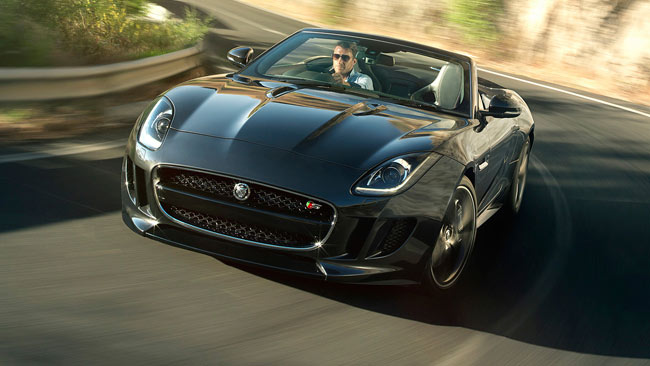
As fans of Jaguar’s new F-type, we’re excited about the positive feedback the F-Type has generated in the media, especially as Jaguar has a lot riding on the new roadster.
EVO magazine UK gives the Jaguar F-Type V8 S a 4.5 rating calling it: “the most exciting British sports car in years”; whereas Autocar UK says: “There’s nothing basic about the entry level F-type”.
The Telegraph UK appears similarly impressed, stating that the two-seater soft top is “great looking, has a blood-curdling exhaust note and goes like a scalded (Coventry) cat.”
We think that sounds just purr-fect!
Jaguar's Project 7 debuts at 2013 Goodwood Festival of Speed
12/07/2013
Today, Jaguar's Project 7 concept makes its dynamic debut at the 2013 Goodwood Festival of Speed.
“When you look at this car, it has got an enormous amount of appeal. It’s just full of desire – you can see that its sole purpose is to be enjoyed. Project 7 is a very special car – not just because it’s a one-off, but because of its purity of purpose. It’s pure Jaguar.”
Ian Callum, Director of Design, Jaguar
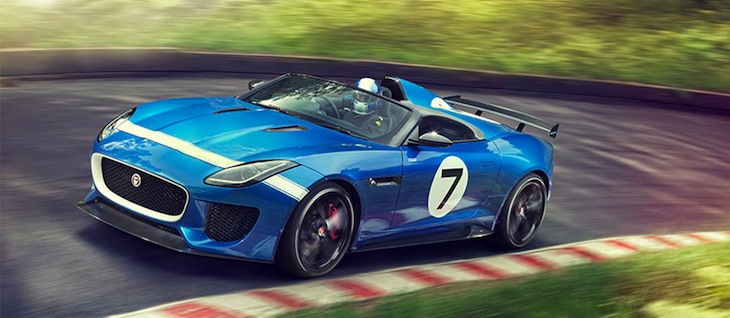
Based on Jaguar’s acclaimed F-Type, Project 7 is a brand-new design study. A 550PS version of Jaguar’s 5.0 litre Supercharged V8 engine propels the sports car up to 60 mph in 4.1 seconds, with a top speed of 186 mph, and the two-seater convertible’s blue paintwork is reminiscent of the victorious Jaguar D-types of 1956/1957.
We are very excited by this new development and hope Project 7 may lead to a repeat performance of Jaguar’s record seven wins at Le Mans.
See below a sneak peak of Project 7 completing its final shakedown before Goodwood (and, if you look carefully, you may even see a D-type in the film).
Member