info@louguthry.com.au I cars 0418536129 I shop 0437938046

McGovern Exit Signals Major Pivot for Jaguar
04/12/2025
Gerry McGovern has departed JLR, marking a significant moment for Jaguar at a time when the brand is undergoing one of the most dramatic reinventions in its history. In recent years McGovern became the central figure behind Jaguar’s repositioning as an ultra luxury, electric only marque, a move designed to reset the brand’s future direction. The reveal of the Type 00 concept was intended to signal this shift, presenting a clean break from the company’s traditional design language. The reaction, however, was sharply divided. Supporters viewed the new approach as bold and necessary, while critics argued that the concept and the surrounding marketing stepped too far away from Jaguar’s heritage. The wider corporate rebrand, including the change in tone, visuals and messaging, became one of the most debated chapters in the company’s modern era.

Above: McGovern was appointed to the JLR board of management in 2021
Although McGovern’s recent focus was firmly on Jaguar, his earlier design leadership played a major role in Land Rover’s success over the past decade. Under his guidance the brand delivered some of its most influential vehicles, including the reinvented Defender, the Range Rover Evoque and the most recent generations of the Range Rover and Range Rover Sport. These models helped elevate Land Rover’s global image, drive sustained sales growth and strengthen its position in the premium SUV market.
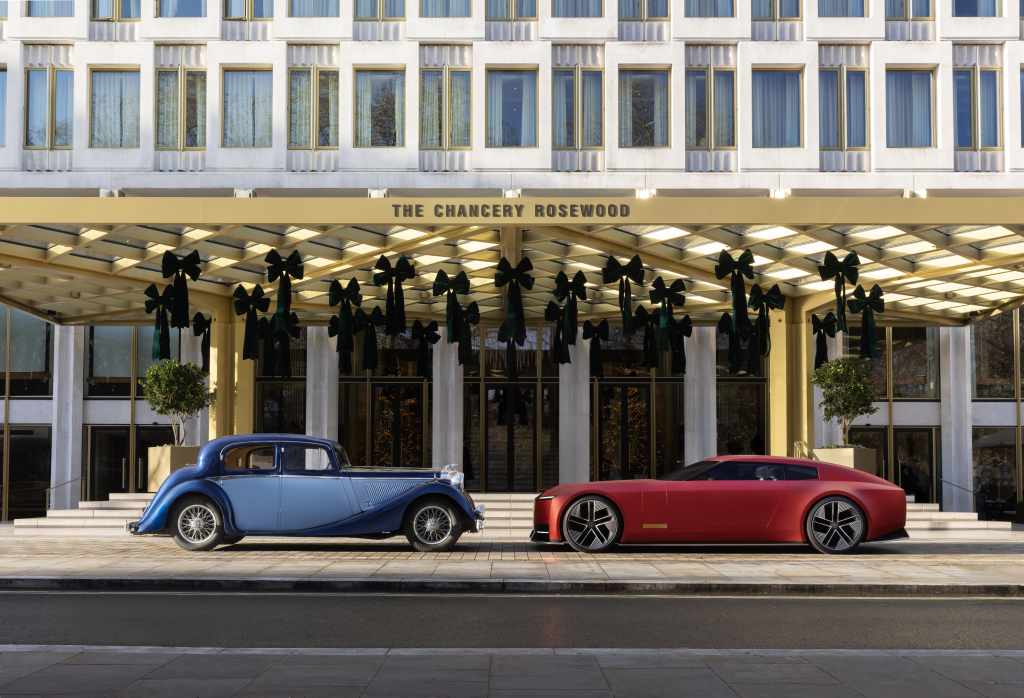
Above: Yesterday the official Jaguar social media accounts posted the Type 00 with an SS Jaguar with the quote 'legacy holds' significantly this marked the first time since the re-brand Jaguar has referenced its past
McGovern’s departure comes as JLR faces a number of broader challenges. The company is still recovering from a major cyber attack that disrupted production and operations across multiple facilities. New American tariffs on imported vehicles have added further pressure at a critical moment for the business. At the same time JLR has transitioned away from the traditional Jaguar Land Rover identity to a simplified JLR structure where Jaguar, Range Rover, Defender and Discovery are treated as separate brands within a single organisation.
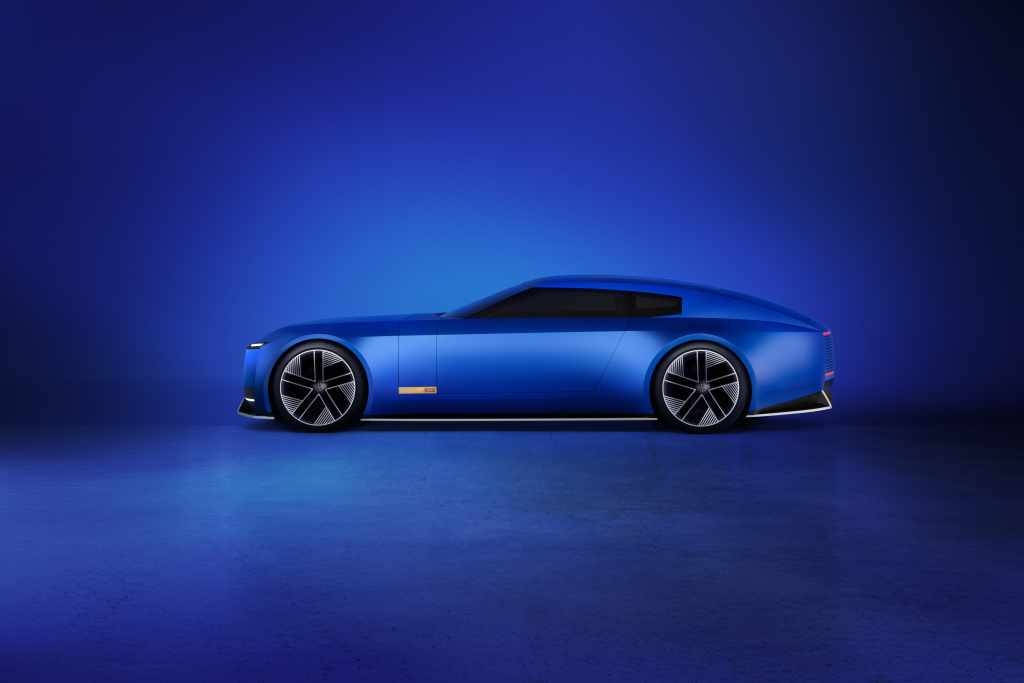
Above: The Type 00 in French Blue
Taken together, these factors provide the backdrop to McGovern’s exit. His contribution to the design and direction of both Jaguar and Land Rover has been significant, and he leaves at a time when the company is reassessing its creative and strategic priorities. For Jaguar in particular his departure marks the beginning of a new phase as the brand works to refine its future identity, balance innovation with heritage and regain stability in a rapidly changing market.
40 years on: How Jaguar broke Ford and Holden’s Bathurst stranglehold
28/09/2025
Story courtesy Supercars.com.au
Ford and Holden are the two dominant players in the history books of the Great Race at Mount Panorama, but occasionally other brands have been able to get on top of the traditional local rivals at Bathurst. Between them, the two local giants won every Bathurst 500/1000 from 1967 to 1984 via a range of Falcons, Toranas and Commodores. But that streak ended 40 years ago this year in 1985 as Jaguar’s roaring V12-powered XJ-S conquered the Mountain to claim the first win of the Group A era in the hands of local ace John Goss and German Armin Hahne.
Below Watch: 1985 Bathurst winning Jaguar XJS start up at the Jaguar Car Club of Victoria Concours
For Goss the victory was his second Bathurst 1000 success, however it came after five long years of developing his own XJ-S racer to Group C specifications that ultimately didn’t deliver at Mount Panorama. His locally produced ‘Big Cat’ failed to finish in 1980, 1981 and 1982 and skipped the big race in 1983 before re-appearing in 1984 in its ultimate Group C spec with Scot Tom Walkinshaw arriving in Australia to co-drive. Famously the car stalled on the grid when the lights went out and was hit from behind, triggering a track-blocking, race-stopping, multi-car wreck that prompted a complete restart.
Walkinshaw returned the following year with a vengeance, complete with his own, three-car line-up backed by JRA Australia.
Below Watch: Hardies Heroes pole lap by Tom Walkinshaw in the number 8 JRA TWR Jaguar XJS
The team boss stormed to pole position and dominated the race but the car he shared with Win Percy was delayed by oil system dramas in the latter stages, opening the door for the #10 Goss/Hahne car to take the lead and go on to victory.
Below Watch: Ride with Tom Walkinshaw through the opening laps of the 1985 James Hardie 1000
“We had to deal with all sorts of things, not the least of which was a broken seat, which my crew bolstered up with wooden blocks and tie-downs,” Goss told Motorsport News in 2005 upon the 20th anniversary of the Jaguar win. “The day dragged on, we came up hour by hour and we managed to hang on and win. “It is difficult to say where the win stands among some that I have had. “Winning the Australian Grand Prix was important and was an emotional victory. But after what I went through for five years (with racing Jaguars), I do not think that I can say what it means … I was driving for a works team, in a role of extreme responsibility. I will never forget the celebrations after the race.” Goss was able to carry the car home despite floating within the cockpit due to the broken seat, seeing off the challenge of the chasing BMWs and Commodores.
Below Watch: The first pitstop for the number 10 TWR JRA Jaguar XJS of winner John Goss
Peter Brock’s Mobil Holden held second place in the dying stages but the single row timing chain in his Commodore cried enough with a few laps to run, letting the BMW of Roberto Ravaglia and Johnny Cecotto through to take second place. The recovering Walkinshaw/Percy Jaguar took third, three laps down on the winning XJ-S.
Below Watch: Peter Brock's 1st Pit Stop in the 1985 James Hardie 1000 and soon after the JPS BMW team play in the sand
While Jaguar won the first Group A Bathurst 1000, Ford and Holden went back to their winning ways at the Mountain from 1986 until Nissan claimed its first victory with the GT-R in 1991. Other manufacturers have won the race since, including BMW and Volvo in the Super Touring races, and Chevrolet in the Gen3 era, but it’s safe to say that Gossy’s 1985 Jag will be the only V12 to win the Great Race for a long time to come.
Why Jezza & Harry Still Drive 10 Year Old Jaguars
09/09/2025
Jezza and Harry sit down to chat about why they drive around in 10-year-old Jaguars, the future of the brand, and the car industry as a whole including reflections on when 'peak car' occurred. Along the way, they touch on a bit of farming too...
Range Rover Velar
08/08/2025
Since its debut in 2017, the Range Rover Velar has carved out its place as one of Land Rover’s most distinctive and design-forward models. Positioned between the Evoque and the Range Rover Sport, it introduced a new era of reductive elegance, blending minimalist styling with cutting-edge technology and trademark Land Rover capability. Celebrated for its striking proportions, refined interior, and balanced performance, the Velar has earned global recognition for design and innovation. In this post, we’ll be sharing reviews and official Land Rover content that highlight why the Velar remains a standout in the luxury SUV segment.
Below Watch: Step inside the creative process behind the 2017 Range Rover Velar, where bold proportions, reductive elegance, and meticulous attention to detail come together. This official design film reveals how Land Rover’s team shaped a new benchmark for modern luxury SUV design.
Below Watch: The Range Rover Velar redefined modern luxury SUVs with its sleek design, innovative technology, and unmistakable Land Rover capability. In this official product overview film, discover the vision, craftsmanship, and performance that set the Velar apart from the very beginning.
Below Watch: Experience the 2017 Range Rover Velar First Edition as it takes on the breathtaking landscapes of Norway. This official driving film showcases its refined performance, effortless capability, and the pure enjoyment of exploring in ultimate luxury.
Below Watch: The Range Rover Velar is the fourth model in the 'Rangey' family, and it's likely to become the most popular. Like the Evoque, it's a game-changer - and a hint of what's to come. Drive.com.au review and first look.
Below Watch: James Cleary road tests and reviews the Range Rover Velar with specs, fuel consumption and verdict at its Australian launch. Carsguide.com.au review.
2021 Jaguar XF Design Overview
31/07/2025
Below Watch: MY21 Jaguar XF design film produced by Jaguar...
Range Rover Evoque Second Generation L551
26/07/2025
Since its debut, the Range Rover Evoque has become one of Land Rover’s most recognisable and commercially successful models. The current generation, L551, released in 2018, builds on the original’s breakthrough design with a refined, modern evolution that stays true to its urban-luxury DNA. It has won numerous global design and innovation awards and played a major role in the growth of Land Rover. In this post, we’ll be sharing reviews and official Land Rover content that showcase what makes the Evoque such a standout in the compact luxury SUV class.
Below Watch: Official Land Rover launch film of the second generation Range Rover Evoque L551
Below Watch: The Range Rover Evoque has evolved to reflect a modernist design philosophy, while setting new standards in sustainability and capability. Featuring a luxurious crafted interior and effortless technology, the Range Rover Evoque is here to make a statement.
Below Watch: With new technology, more space and a sleeker, more resolved styling, it seems the 2019 Range Rover Evoque has finally grown up. But can it mix it with the best in the premium SUV segment? Carsguide.com.au launch review.
Below Watch: The baby Rangie been one of Australia’s top-selling mid-size luxury SUVs since 2011 and over the last seven years the British car-maker has managed to shift an incredible 800,000 of them worldwide, making it the fastest-selling Land Rover of all time. Carsales.com.au launch review.
Below Watch: The first Range Rover Evoque was a victory for the brand, can this long-awaited second-generation replicate its success? Tom White was at its Australian launch to find out. Carsguide.com.au Australian launch review.
Thinking About Club Rego? Here’s What You Should Know
19/07/2025
Club Registration Overview
Club or historic registration is a popular and cost-effective option for owners of older vehicles in Australia. Most states and territories offer reduced registration fees and limited-use schemes for eligible classic cars—typically those over 25 or 30 years old. In some cases, buyers can also save hundreds of dollars in stamp duty when registering the vehicle directly into their name under a club permit.
This guide is provided as a general reference only. Eligibility rules, costs and exemptions vary between states and may change. We recommend confirming the current requirements with your local road authority or car club before purchasing or registering a vehicle.
Club Registration Stamp Duty Guide (by State)
Victoria (VIC)
- Stamp Duty: Exempt
- Eligible Vehicles: 25+ years old
- Conditions: Must be registered under the Club Permit Scheme via a VicRoads-approved car club
- Estimated Club Rego Cost: $80–$180 per year (based on 45 or 90-day permit options)
South Australia (SA)
- Stamp Duty: Exempt
- Eligible Vehicles: 30+ years old (Historic, Street Rod or LHD)
- Conditions: Must go directly onto historic registration via a recognised club
- Estimated Club Rego Cost: $110–$130 per year (plus a one-off logbook fee)
Western Australia (WA)
- Stamp Duty: Exempt
- Eligible Vehicles: 25+ years old
- Conditions: Must be registered under the Code 404 scheme through an approved car club
- Estimated Club Rego Cost: $70–$120 per year
Tasmania (TAS)
- Stamp Duty: Exempt
- Eligible Vehicles: 30+ years old
- Conditions: Must be registered as a Special Interest Vehicle via a recognised club
- Estimated Club Rego Cost: Approx. $90–$120 per year
New South Wales (NSW)
- Stamp Duty: Payable
- Eligible Vehicles: 30+ years (Historic) or 25+ years (Classic Modified)
- Conditions: Stamp duty applies at transfer, even if the vehicle goes onto a club rego scheme
- Estimated Club Rego Cost: $50–$80 per year (Historic), higher for Classic Scheme (engineer certification may apply)
Queensland (QLD)
- Stamp Duty: Payable
- Eligible Vehicles: 30+ years old
- Conditions: Stamp duty applies when transferring ownership, even under the Special Interest Vehicle Scheme
- Estimated Club Rego Cost: Approx. $200–$250 per year (heavily discounted from standard rego)
Australian Capital Territory (ACT)
- Stamp Duty: Payable
- Eligible Vehicles: 30+ years old
- Conditions: Stamp duty generally applies unless a rare exemption is granted
- Estimated Club Rego Cost: Around $120–$140 per year (plus inspection and logbook costs)
Northern Territory (NT)
- Stamp Duty: Payable
- Eligible Vehicles: 30+ years old
- Conditions: Stamp duty applies unless specific exemptions are available on a case-by-case basis
- Estimated Club Rego Cost: Around $100–$150 per year
Tip for Buyers
To maximise savings, consider registering the vehicle directly into your name on club registration where stamp duty is exempt. Ongoing registration costs under these schemes are usually a fraction of full rego fees—especially in Victoria, South Australia, Western Australia and Tasmania.
Note: All figures are estimates and may vary based on vehicle type, local fees, and additional levies. Club membership is required and typically costs $40–$100 per year depending on the organisation.
This information is provided as a guide only and may not reflect the most current policies in your state or territory. Always check with your local road authority or club registrar before proceeding.
Jaguar XK X150 5L V8 Coupe Facelift
08/07/2025
Below Watch: Last and best of the XK Series with revised front bumper and light design. Powered by the Gen 3 AJ-V8 direct injection 5.0L V8 with a very light all aluminium construction, performance is superb. Last of the great XKs.
Jaguar F-Pace MY20
17/04/2025
Below Watch: Join Motoring Journalist Ginny Buckley on an in-depth walkaround of Jaguar F-PACE, featuring updates for the MY20 model range.
Member